Smithsonian Collections Blog

Highlighting the hidden treasures from over 2 million collections

Collections Search Center
Showing posts with label Freer Gallery of Art and Arthur M. Sackler Gallery Archives. Show all posts

Wednesday, October 11, 2017

Collections Spotlight: Freer Gallery of Art

After being closed for more than a year, the Freer | Sackler is reopening this weekend.  This closure has allowed the Freer | Sackler to completely reinstall all of their exhibitions and revitalize the building, which first opened to the public in 1926.  Importantly, in this revitalization the museum replaced crucial climate control and humidity control systems; work that will ensure the collection is preserved for generations to come. 

IlluminAsia: A Festival of Asian Art, Food, and Cultures - Join us for a festival of Asian art, food that will transform the museums’ grounds with an Asian food market, interactive cooking and art demonstrations, live music by members of the Silkroad Ensemble, and creations by local and international artists. 
This weekend the Freer | Sackler, the Center for Folklife and Cultural Heritage, and all of the Smithsonian is celebrating the grand reopening with IlluminAsia, a festival of Asian art, food, and cultures. As we wait for the festival to begin on Saturday night, here is a peak at some of Smithsonian Institution Archives' photos of the beginnings of the Freer Gallery of Art. 

Construction of the Freer Gallery of Art. Smithsonian Institution Archives, Image # MAH-29337. 
 This October 2, 1916 photograph shows digging of the foundation for the new Freer Gallery of Art. In the foreground equipment of George Hyman Contractors is loading excavated dirt onto horse-drawn carts. Visible in the background is the brick shed built in 1875, called the Laboratory of Natural History, and the Smithsonian Institution Building. The shed, which was used by taxidermists and preparators as well as photographers, was demolished during the course of construction work.

J. Bundy in Freer Gallery of Art Courtyard with Peacocks. Smithsonian Institution Archives, Image # SIA2007-0175. 
John Bundy, Superintendent, 1921-1939, Freer Gallery of Art, and Superintendent of Construction, 1919-1928, kneels as he feeds pellets to peacocks in the courtyard of the Freer Gallery of Art. Bundy is holding a dish in his left hand. Peacocks occupied the courtyard for many years. The National Zoological Park lent the peacocks to the Freer Gallery. The Annual Report for the Smithsonian Institution for the year 1923 notes that the peacocks were moved from the courtyard of Freer Gallery of Art to the National Zoological Park for the winter.

Explore more about the Freer | Sackler: 
IlluminAsia: A Festival of Asian Art, Food, and Cultures
- Historic Pictures of the Freer Gallery of Art, Smithsonian Institution Archives
- Blog Post: Cleaning Up Freer's Attic
- Blog Post: Sneak Peek: Freer Gallery of Art


Lisa Fthenakis, Program Assistant
Smithsonian Institution Archives

Tuesday, June 13, 2017

Cleaning Up Freer’s Attic

Collections change over time. Collections often come from chaos. Archival collections are often a rushed boxing up after someone passes. The collector is no longer there to ask questions of. This inherently leads to questions. What was this ledger for? Who were these letters to? How did they want their art displayed?

Archivists, museum staff, and researchers grapple with these questions every day. It is often where interesting exhibits come from.

Head Archivist, David Hogge, puzzling out how to organize various photographs.
The Freer | Sackler Archives made the decision a year ago to overhaul the Charles Lang Freer Papers. Please click here for a link to his new and improved finding aid! Freer was the founder of our museum. Opened in 1923, it was the first topic-focused museum at the Smithsonian and its first art museum. Freer did not live to see his museum completed, but the museum did receive, on top of all of his art collection, his vast collection of papers.

Freer was a meticulous man when it came to his correspondence, his purchasing, and, well, everything. This has left a rich collection of papers for museum staff and researchers to use when studying a Freer art object or the man himself.

Not all paper is of equal size.

The finding aid (guide to any collection) for Freer’s papers, like so many other “legacy” archival collections, was created before modern archival standards were established. F|S Archives staff made the decision to overhaul the Freer papers after having many problems in recent years, both finding items for researchers and dealing with how to organize their digital surrogates. You must have a firm handle on the physical side of any archival collection before you can even contemplate digitizing it.

Working in an archives means using your hands and handling physical objects from paper to film canisters.
Physical collection? What is that you ask? It must be hard to imagine in this age of digital smorgasbord that there are still items in the world that are only available in the physical format. Well, a large part of what archivists do is make available in a digital environment what was once only sitting on a shelf in a box and only a few passionate researchers even tried to look for. Everything in an archives is unique, one a kind, the only one in the world.

Archivists are working hard around the world to make unique pieces of human history available and accessible to all, please see this great blog post about putting more of human history online. So
digitizing archival materials is crucial to both outreach (anyone in the world can look at the digital surrogates from the various Smithsonian Archives) and to the long term life of the materials. Paper lasts a long time, but it does not exist forever.

How does one organize a physical collection? How does one re-think it? A collection is always organized to preserve any original organization of the creator, in this case Freer. There are times where it becomes obvious there was no organization to begin with. This is often the main mystery that archivists struggle with on a daily basis: did so and so want these papers this way? Were these postcards meant to go together? Was this part of their research patterns? Their collecting patterns?

Organizing ones thoughts the old fashioned way, on paper.


When archivists make decisions about organization, we are not copy-pasting some files to a new folder in a computer drive. We are weeding through boxes and boxes of materials and attempting to form them into a unit of thought or creator's process. Think of it this way, what if you had to organize Bob Dylan’s writing process. There would be tons of paper or scraps of papers and you have to figure out if he had an order to begin with or was it all chaos? Is imposing some sort of order, potentially where none exists, harming the integrity of Dylan’s creative process or are you creating just enough access points so that a researcher writing the next bestselling Dylan biography can find what he/she needs to do their job?

Basically, does taking a mountain of paper and creating an access pathway (e.g. putting the materials in folders and boxes with labels), a way of thinking about them, looking at them, destroy intrinsically what they are?

The slow task of properly identifying and labeling boxes.  Lots of glue gets on your fingers.
There were many sections of Freer’s papers like this; piles of paper all next to one another and yet had nothing in common. F|S Archives Staff had to separate out these papers into neat pathways that would lead researchers to access points of useful information. For example, what now constitutes Series One in the Freer Papers, was once a few boxes that were just near one another. If you look at the finding aid now, you can see clear pathways/access points (e.g. Memberships and Honorary Awards, Freer Residences, Genealogical Materials, etc.). These pathways are called Series and Subseries in the archival world. Neat piles of paper that all have their own theme and purpose. This makes it much easier for researchers to find what they need; whether that is physically handling the materials or doing a Google word search. We have made these important documents that much more accessible to the citizens of the world.

This aspect of creating finding aids is the complex intellectual part. There are other aspects to cleaning up a collection that are much more hands on.

One of the biggest decisions the F|S Archives made was to completely re-number the boxes and materials in the Freer papers. This may seem like a small thing. Well, the Freer papers hold over 300 boxes and this would not just be re-numbering the boxes in a digital document (the Freer finding aid), it would entail physically pasting new labels on all of the over 300 boxes. You are probably thinking, why would you do that?!
A wall of a job of well done.
Well, most of the Freer papers are not digitized. The only way to track and monitor the small physical components of the collection is to have solid and accurate box numbers. In addition, the archives has to have strong control of the physical space our materials reside in. We have a space matrix documenting where the materials of all of our, over 100, collections are shelved.

So, yes, having accurate labels on the physical materials in an archive is essential. The long term goal – archives often have to think in the long term, collections are too large to allow for instantaneous work – is to enable much of Freer's papers to be digitized, so that more scholars around the world can examine his materials and learn more about Charles Lang Freer, his art collecting, and the art pieces themselves.

Lara Amrod, Archivist

Thursday, November 10, 2016

Betsy’s Travels through India

In the Freer | Sackler Archives our best volunteer is a woman named Betsy.  Betsy has been working in the archives since 2001.  Fifteen years of detailed and focused attention that has led to the creation and availability of the Smith and Pope collections.  She is the quintessential no-nonsense woman with a heart of gold.

Sometimes I think that the hard work that goes into making a collection available (doing basic preservation, creating the finding aid, organizing the materials, etc.) is overlooked.  Making a collection accessible to the public is a monumental task.  Collections generally do not arrive ready to be put online, with digital surrogates and finding aids.  Often collections are literally a palette of boxes pulled out of someone’s basement or an unorganized hard drive of materials.  The person who is tasked with organizing a collection for access to the public has to preserve the thought processes of the collection's creator and at the same time ensure that the materials are organized in such a way that they can be combed through by eager researchers.

Betsy hard at work in the Freer | Sackler Archives
This past year Betsy has been working hard on the papers of Dr. Prince Aschwin de Lippe-Biesterfeld, PhD (1914-1988).  Lippe was curator in the Far Eastern Department at the Metropolitan Museum of Art from 1949 until 1973. He specialized in Chinese Classical Paintings.  The subject matter of this collection was a bit out of Betsy’s wheelhouse of knowledge, but she is more than capable of working through a collection regardless of subject matter expertise.

from Left to Right): James Cahill, Aschwin de Lippe, H. Bevil, and John Pope.  Taken at National Gallery of Art, 1961. 
There were, of course, some bumps along the way.  The biggest speed bump came with trying to identify locations in the countless photograph slides that Lippe had taken during his travels and study of India.  Betsy has a lot of experience with photographs and she first approached this problem from the angle of making all the negative and slide numbers match to at least give these photographs a sense of order for researchers. Secondarily, she made note of any writing on slides photographs and added those to the finding aid she was building in tandem with her physical overhaul of the Lippe collection.

Some of these notes had difficult to read hand writing.  One particular slide note was hard to read and Betsy asked me if I could make it out.  I starred at it for a while, afraid to verbalize my answer.  She jumped in and said it looks like the second word looked like Butterball, but I can’t make out the first word.  I felt better that I was not the only one who thought it said Butterball.  After a little time we determined that the first word was Krishna.  Since neither of us are subject matter experts, I did a search online and low and behold we discovered that Krishna’s Butterball is a real rock in India.

Krishna’s Butterball in Mahabalipuram, India. Prince Aschwin de Lippe Papers 1940-1988,FSA A2012.01 Box 11, Folder 33
Krishna’s Butterball is one small example of the amount of research and time that goes into making materials clear and organized. Betsy had to check out several books from the library to cross check and confirm locations in India.  She had to completely read through and then figure out a way to order Lippe’s research notes and notebooks so that they both preserved Lippe’s thought processes and could actually be accessed by scholars.

Working on an archival collection is always a long game.  Sometimes you only organize a few folders due to the complexity of the materials. Other days you have epiphanies about connections between various scattered materials and can go through several boxes. We are lucky to have someone as intelligent, tenacious, and dedicated as Betsy working in the Freer |Sackler Archives.

Collections Betsy has Organized:
Myron Bement Smith Collection
John Pope Papers
Prince Aschwin de Lippe Papers

Lara Amrod
Freer | Sackler Archives

Tuesday, October 25, 2016

Sneak Peek: Freer Gallery of Art

While we are awaiting the Freer Gallery of Art’s re-opening in October 2017, let’s take a peek at some recently digitized photos of the Freer though the years. Arriving at the Smithsonian Institution Archives in 2002, these photos come from a collection that documents early building plans for the Freer and how the building has changed over time.  The collection spans nearly 100 years, from photos of the Freer’s groundbreaking ceremony in 1916 to the various changes and renovations over the years.

Groundbreaking for Freer Gallery of Art, 1916, Smithsonian Institution Archives, SIA Acc. 02-082 [SIA2015-000823].
Showing the staff of the museum gathered in front of a grove of trees for the ceremony, you can see how much the National Mall has changed in the century that has passed.  A later photo below shows the Gallery just after it had been completed. The Department of Agriculture building can be seen to the right, while trees and row houses are also visible in the neighborhood.

Aerial View of Completed East and North Front of Freer Gallery, by Unknown, c. 1923,
Smithsonian Institution Archives, SIA2007-0170.
In the 1920s, three peacocks lived in the Freer Courtyard. Donated by the National Zoological Park as a fitting complement to James McNeill Whistler's Peacock Room, they moved back to the Zoo each winter and returned to the courtyard in the Spring.

Peacock and Babies in the Freer Gallery of Art Courtyard,
Smithsonian Institution Archives, SIA Acc. 02-082 [SIA2014-07070]. 
A building needs care and attention to last 100 years.  A previous renovation in the early 1990s did just that, expanding as well as renovating the existing space. Construction workers are shown through a partially constructed interior wall with the library still ready for research in the background.

Renovation of the Freer Gallery of Art, Smithsonian Institution Archives, SIA Acc. 02-082 [SIA2015-000821].
Additional renovations include the addition of the Sackler Gallery of Art in the 1980s, and, of course, the current renovations to upgrade the Freer's infrastructure. While the Freer is closed, you can still visit the Sackler and visit the Freer online, either through their digital collections or through Google Art Project.

To see more historic photos of the Freer Gallery of Art, click here and explore accession 02-082 or visit the Smithsonian Institution Archives' history page on the Freer Gallery of Art.


Lisa Fthenakis, Program Assistant
Smithsonian Institution Archives

Thursday, August 25, 2016

Change the Station, Change the Noise: Space for the Inner Self in Wild Places

When one is alone at night in the depths of these woods, the stillness is at once awful and sublime. Every leaf seems to speak.
~ John of the Mountains: The Unpublished Journals of John Muir (1938) 

Our world is a huge ball of constant connection, be it from phones to tablets to computers. We are bombarded with noise; the noise of voices, opinions, statistics, and 24 hour news cycles. It was not so different at the turn of the 20th century. Communications were being invented and exploding around the world. Newspapers were the twitter of this era. Letter writing was texting. Phones were still in their infant stages of growth. There was a new kind of noise, and people were feeling just as overwhelmed by it as people today feel by their phones and online presence.
Yellowstone by Thomas Moran, Cooper Hewitt Smithsonian Design Museum
It was around this time that people, such as John Muir and Aldo Leopold, were taking up the cause to save open spaces and to escape from the 'noise' of the modern world. Sounds familiar doesn't it? Many were doing the “Grand Tour” of Yellowstone, among them were Teddy Roosevelt and even Rudyard Kipling. Kipling visited Yellowstone in 1889, he wrote in his journals that he encountered “The Wonderland” one has only read about in books. Art collector, businessman, and founder of the Freer | Sackler Museum, Charles Lang Freer, was among the many Americans who discovered the beauty and peace in the natural wonders of the United States wilderness.

Though we travel the world over to find the beautiful, we must carry it with us, or we find it not. 
~ Ralph Waldo Emerson

Freer often went hiking with Frederick Stuart Church, an artist, with whom Freer had become great friends. In the 1880s, Freer started building his renowned print collection and he was soon elected chair of the Detroit Club, which had been founded by prominent Detroit citizens to open an art museum. It was through this organization that Freer became friends with several leading American painters including Church, Gari Melchers, Dwight William Tryon, and Charles A. Platt.

Charles Lang Freer in the Catskills, Freer | Sackler Archives


Freer and Church often hiked and camped out throughout the famous Catskills Mountains. The Catskills are a famous refuge for outdoors seekers, hikers, and artists. The area has been made famous through stories and artwork by such illustrious people as Washing Irving and Thomas Cole.

Falls at Catskill by Thomas Cole, Smithsonian American Art Museum

Freer viewed traveling into nature as a means of finding balance in a world overrun by industry and competition. As he wrote to Frank Hecker in 1892, "We spend nearly all of our hours outdoors and like the springs of these mountains we have a feverish desire to keep in constant motion. The springs minister to our refreshment, the air invigorates us…" Through Freer’s receptiveness to the power of wallowing in the natural world, he gained an abiding appreciation of landscape painting. Painter Dwight Tryon was just beginning to get recognized in 1889 when Freer bought his landscape, The Rising Moon: Autumn right off the easel in Tryon's studio.

The Rising Moon: Autumn by Dwight William Tryon,
Freer | Sackler Smithsonian's Museums of Asian Art


I only went out for a walk and finally concluded to stay out till sundown, for going out, I found, was really going in. ~ John Muir


So it seems even the important personages of the early 20th century were looking for "down time" and "disconnection" from modern communications and noise.  It was a way to not only connect back to the physical world around them, but to reconnect with themselves and one another.  Perhaps we all need this sacred space to reconnect with the inner most chambers of ourselves? 


4c Forest Conservation Single,
National Postal Museum Collection
Teddy Roosevelt ended up being one of great advocates for creating National Parks, he became known at the "conservationist president." Yellowstone, the first National Park was created by Ulysses S. Grant in 1872. Roosevelt toured Yosemite with John Muir in 1903 and ushered in the National Monuments Acts Act in 1906, which helped to create many preserves and parks. On August 25th, 1916, The National Park Service, was finally created and is celebrating its 100th anniversary today. We have always needed the land, not just for sustenance, but for the wild places that can replenish our inner selves, so they run over with renewed inspiration for living. Not all wild places need be far away, it can be as simple as taking the time to visit your local park. Looking at the clouds, the trees, observing the dappling light play through the trees, jumping in a lake. Be in the moment, be in a different type of noise. Oliver Sacks may have phrased it best in these modern times, “We seek ... a more intense sense of the here and now, the beauty and value of the world we live in." Choose a day and just wander down your local streets, free of everything, but your moving legs and open ears.


Charles Lang Freer in the Catskills, Freer | Sackler Archives


Only one who wanders finds new paths. ~ Norwegian proverb


Rest is not idleness, and to lie sometimes on the grass under trees on a summer's day, listening to the murmur of the water, or watching the clouds float across the sky, is by no means a waste of time. 
 -  John Lubbock

The Grand Canyon of the Yellowstone by Thomas Moran, Smithsonian American Art Museum

Lara Amrod, Archivist
Freer | Sackler Archives


References
Avery, Kevin J. Hudson River School. New York: Metropolitan Museum of Art, American Wing, 2004.

Kipling, Rudyard. From Sea to Sea and Other Sketches, Letters of Travel (Cambridge Library Collection - Literary Studies). Cambridge: Cambridge University Press, 2011.

Lawton, Thomas and Merrill, Linda. Freer: A Legacy of Art. Washington, D.C.: Smithsonian Institution, Freer Gallery of Art, 1993.

National Park Service. Theodore Roosevelt and Conservation.

National Park Service. Yellowstone: A History of the First National Park. 2009.

Wednesday, June 22, 2016

Ice Cream! Come and get your Ice Cream.

We have been having some interesting weather of late here in the D.C. region. D.C. can be a very hot and humid place in the summer, but that doesn’t stop tourists from visiting this city or from buying ice cream that will inevitably melt down their fingers in the heat. How did hot countries and countries at the height of summer ever get ice cream without the benefit of modern day freezers?

Dwight Eisenhower eating an ice cream bar.  AC0451-0000037.tif
Good Humor Ice Cream Collection, Archives Center, National Museum of American History.
Well, ice cream and “ice cream trucks” actually has a long history. It is believed that ice cream originated in China starting with rice being mixed with milk and then stuck in the snow to freeze. Later the upper classes sent servants into the mountains to get snow so that fruit and juices could be added, creating an early form of sorbet. Of course, the working class could not afford such indulgences.

In the late 17th century, was one of the first places in Europe to serve ice cream to the general public was Café Procope in Paris, but it was still for the upper echelon and not a wide spread treat. Several early American Presidents loved ice cream, including George Washington, James Madison, and Thomas Jefferson who created his own vanilla ice cream recipe . At this point, ice cream was more common, but it was still reserved for special occasions.

Good Humor Vendor with Pushcart. Neg. No. 92-11719.
Good Humor Ice Cream Collection, Archives Center, National Museum of American History. 
Ice cream treats received some assistance from Carol von Linde, who invented industrial refrigeration in the 1870s. This invention along with many from the industrial Revolution made it much easier to produce, transport, and store ice cream and many other perishable items. Soon new and different flavors followed including the invention of ice cream soda.

“Won't You Have an Ice Cream Soda with Me” Sheet Music. Catalog No. 1982.0745.04.
National Museum of American History, Kenneth E. Behring Center. 

It was through the cafes of Paris that King Nasser uddin Shah, of Iran, first learned about ice cream, but it was his successor, Mozaffar uddin Shah, who brought bastani, or ice cream to Iran. Akbar Mashdi (Akbar Mashahdi Malayeri) was the first Iranian to vend ice creams. He was famous in Iran and was known as far afield in places such as Los Angeles and Paris. Mashdi was born in a remote village in 1868 and worked many different jobs before selling ice cream. One of his earlier jobs was transporting tea and sugar to northern cities and bringing back firewood to Tehran. Mashdi became friends with Mohammad Rish, who had ties with Mozaffar uddin Shah’s courtiers. This is how Mashdi became familiar with the tasty treat that is ice cream.

People at Maydan-I Mashq's ice cream cart in Tehran. FSA A.4 2.12.Sm.01.
Myron Bement Smith Collection: Antoin Sevruguin Photographs. Freer Gallery of Art and Arthur M. Sackler Gallery Archives. Smithsonian Institution, Washington D.C. Gift of Katherine Dennis Smith, 1973-1985. 
When Reza Shah came to power Reza Khan, Mohammad Rish, and Mashdi seized the moment to found the first ice cream shop in Iran. Rish only stayed in the ice cream business for two years, but Mashdi would sell ice cream for the rest of his life. Due to a lack of modern refrigeration, Mashdi worked a lot in the wintertime and in the mountains near Tehran. People, including, Mashdi had to use natural refrigeration. To preserve ice cream during the hot summer months, they would dig very deep holes. Everyone from commoners to courtiers purchased ice creams from Mashdi.

Lara Amrod, Archivist
Freer | Sackler Archives


References
History of Ice Cream (Bastani) in Iran by Ahmad Jalali Farahani, June 2004
The History of Ice Cream by Emily Upton June 16, 2013

Thursday, April 14, 2016

The Saga of a Battle Ready Volunteer: AKA A Diamond in the Rough

Places of business go through a lot of changes.  Archives are no different.  Seasons and interns come and go.  You have some volunteers for a year or two and others are around forever, becoming part of your work family.  They are indispensable.  The Freer|Sackler Archives has such a volunteer in Betsy.  She has been working here for fifteen years and rarely misses a week, unless she is off traveling the world.  Betsy is an extremely intelligent, quiet, and dedicated volunteer.  She volunteers several places in the region and the Smithsonian is very lucky to have her.  

Bonfil's photograph of Palmyra found in Smith Collection.
Betsy has worked on many collections for us, but none was bigger or more important than the Myron Bement Smith Collection.  Smith was a classical archaeologist, architect, and art historian from New York who had a lifelong devotion to West Asia, accumulating some 87,000 items documenting Islamic art and culture from Spain to India, with an emphasis on architecture.  Smith, like so many scholars of this era, was a methodical man who kept records of everything. This has ended up making his collection even more invaluable to researchers.  For example, some items, such as Félix Bonfils’ 1860s photographs of Palmyra have recently become invaluable because they are the only representations of these important sites.

A few years ago we hit a snag with the Smith Collection, which we thought was done.  We were immensely lucky to have Betsy as our wing woman. We had a researcher, who had worked with the Smith collection before, request something from the finding aid and we went to retrieve it.  Then something odd happened - we could not find the materials. It was not Betsy’s day in the archives, so we requested the researcher come back the next day.  We were hoping it was us just not looking in the right place, rather than something missing.

Myron Bement Smith and his wife Katharine.

Some of the recovered Smith materials.
The next day rolled around and Betsy looked for the materials as well, but, sadly, she could not find them either.  It was decision making time.  My boss, Betsy, and I talked it out and we came to the decision that all the physical locations in the finding aid needed to be checked.  Was Betsy willing to do this?  Thankfully, she was willing.  During this time, my boss and I were relocating some collections to better utilize the space in the archives.  We were moving glass plates and adjusting shelves when low and behold there, under a shelf, were the missing items from the Smith collection. 

There was another powwow about the Smith Collection and we all decided that Betsy’s check of the Smith collection should expand to the entire finding aid.  The ever hard working Betsy agreed because she wanted the collection to be accurate and as useful to researchers as possible.  She and I worked together even going so far as to re-label a good chunk of the boxes.  Wonderful things have come from overhauling this collection and finding aid, researchers from different areas of study have used this collection and we continue to get requests for this collection on a weekly basis.  All of Betsy’s hard work was worth it.  As she has said, she just wants the collection to be of use and it very much is.

This was a large, important project and Betsy had been working on it for years. So she knuckled down and went through it to make it better, to make it shine. Working with Betsy on this project was educational, meaningful, and wonderful.  I had the honor of getting to know this brilliant woman who volunteers for the Smithsonian and I got to hone my skills as an archivist.

Read more about overhauling this finding aid in Excavating a Finding Aid in Archival Outlook.

Lara Amrod, Archivist

Thursday, March 31, 2016

Where have All the Scrolls Gone?

Have you been spending time lately thinking of just the right words to put in that 144 character tweet? Have you wondered is this photograph good enough before posting to Instagram?  Have you been wondering what important people will think of your blogs?

Tang Dynasty Scroll
The formats have changed, but how we interact, appear, or present ourselves to others has always been a part of society.  But how did people present thoughts, ideas, etc. to one another before the advent of computers?  Well, of course, there were letters.  There were cards.  Handwriting and drawing were also a huge factor when few people had cameras (and definitely not in your phone). 

People had to figure out ways to leave a good impression with different types of material.  Many people chose to create letters, but not just any letters.  They chose to make the letter a continuous and often decorous scroll.  This made for a unique and memorable exchange of ideas.

Scrolls date back as far as ancient Egypt and were the first editable record keeping texts.  They were great because they were flexible and could be long unlike their cousin, the clay tablet. This communication technology lasted until the Romans created the codex, or bound book, around the first century A.D.  Regardless, scrolls were respected and used more by the Romans well into their civilization. 
Qing Dynasty Handscroll

So imagine carrying around scrolls instead of phones or e-readers.  And now imagine you would only be carrying one around if you were someone who could read, like an official. So no devices that fit in your pocket.  And no instant access to all the information you want.


A shift from the scroll started to happen in the first century A.D. The adoption of the codex among early Christians is as explainable as the attraction of modern nerdy groups to cyberspace. With both groups of people there has been a need for a reading and communication mode suited to construct a society of unconventional dispersed individuals.  There was also a rising working class with increased a need for notebooks or account books.


Codex Washingtonensis
 A codex consists of folded pieces of vellum, papyrus, or paper that are then bound on one end so that the “pages” can be flipped through.  The continuous scroll stayed in use, but quickly lost ground to this new and easier to handle reading format.  Scrolls could be ten meters long, it was much easier to flip through folded pages of a codex than to have to unroll six meters of scroll to get to the passage you wanted! Random access points may seem like a small thing, but they changed the way people processed information.  The next big change for books would come with the movable type of Guttenberg.


A Group of Geese

 The use of scrolls never completely disappeared, but moved to the background.  Scrolls are still used for ceremonial texts or decoration, especially in Asian and Islamic cultures.  These scrolls were often elaborately decorated with calligraphic writing that included the use of embossing and pigments.  These cultures also created hanging art scrolls.
A scroll letter to Freer from Harada.

Scrolls are still occasionally used in this day and age.  In the early 20th century it was used as part of nice gifts or thank you cards between people. It was also used famously by Jack Kerouac to write his novel On the Road.  Kerouac said that he hated to stop typing to put paper in the typewriter so he taped the papers together so he did not have to interrupt his creativity.  In addition, the jargon “to scroll” or “scrolling” used on computers and internet dates back to scrolls.  So in some ways, scrolls have never gone away.

For more information on Kerouac's On the Road Scroll please see watch this video.

Lara Amrod, Archivist


References

The Book: The Life Story of a Technology by Nicole Howard. John Hopkins University Press, 2009.

From Scroll to Screen by Lev Grossman.  New York Times, September 2, 2011.

Great Evolution of Books by Ken Liu.  PowellBooks.Blog March 10, 2016


Thursday, October 29, 2015

Throwback Thursday: Squeeze Making

Blogs across the Smithsonian will give an inside look at the Institution’s archival collections and practices during a month long blog-a-thon in celebration of October’s American Archives Month. See additional posts from our other participating blogs, as well as related events and resources, on the Smithsonian’s Archives Month website.

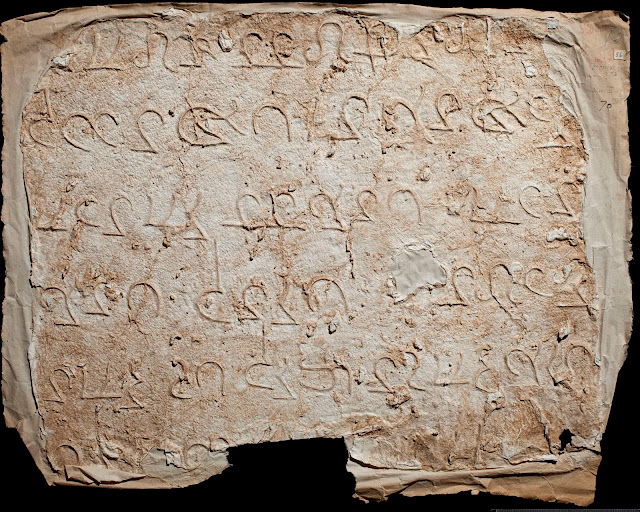
With the abundance of technology that surrounds us every day, it’s easy to forget how we ever got along without it. Never fear, archives are here to help answer this and many more questions! For example, how did archaeologists capture and render a three-dimensional image in the early 20th century? We’re glad you asked. Before the invention of 3-D scanners and printers, there were squeezes.


A squeeze is a series of moldable paper, pulp, latex, or plaster that are layered on top of each other and moistened to create a wet pulp. The substance is then pressed, into a low relief inscription. When the material is dry and removed, it becomes a multidimensional mirror-image representation of the original inscription.

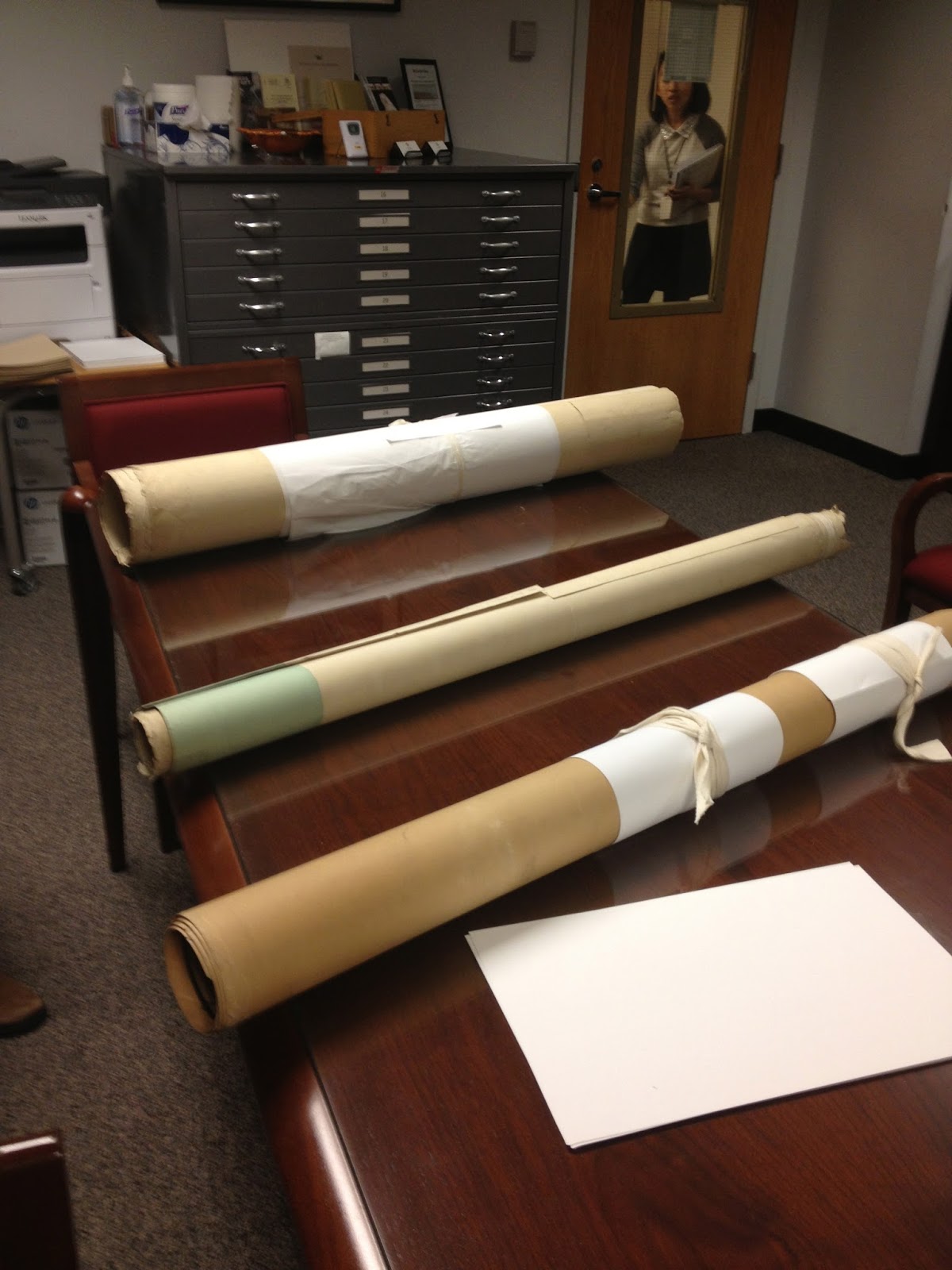
The images shown here are from the Ernst Herzfeld Papers housed in the Freer Gallery of Art and Arthur M. Sackler Gallery Archives. The Archives holds 393 squeezes from the ancient Near East, the largest collection outside of Iran and Iraq. To learn more, visit the Squeeze Imaging Project.
Chelsea Fairley
Freer|Sackler Archives

Tuesday, October 20, 2015

All is Made New Again

Blogs across the Smithsonian will give an inside look at the Institution’s archival collections and practices during a month long blog-a-thon in celebration of October’s American Archives Month. See additional posts from our other participating blogs, as well as related events and resources, on the Smithsonian’s Archives Month website.

In this second information age, libraries and archives are constantly working to put “hidden” materials, collections, and data online so the public and scholars can discover bits of the past and make connections that may have seemed lost.

Over the last few months, working with the Freer Sackler’s wonderful Digital Media and Technology team, the archives has been able to streamline and improve our website.   We now have new and improved resource gateways for various collections including Ernst Herzfeld and Antoine Sevruguin.

Alice Roosevelt on the deck of the SS Manchuria.
We have also been able to add an entirely new gateway dedicated to Alice in Asia: The Taft 1905 Mission to Asia.  This collection came to the archives through a member of the Roosevelt family.  The collection is filled with wonderful photographs and portraits.  Most recently, the wonderful new resource gateway was featured on Smithsonian Magazine’s blog.

Aleppo (Syria): Madrasa al-Zahiriyya, Entrance Portal: Plan, Elevetion and Section
Furthermore, we have created collection level records for all of our collections.  In addition, through the development of the SOVA project all our finding aids are now searchable and downloadable PDFs.  This will be a great help to scholars who want to dig into collections.  This also makes our daily work load much more manageable because these new changes allow us to find errors and correct them immediately.

Collection organization starts from the the physical formats (paper, photographs, film) into understandable series boxes and order.  It is now also necessary to insure that the context and organization (also preservation of creator’s thoughts) are preserved in an online setting.

Lara Amrod
Freer|Sackler Archives

Tuesday, October 6, 2015

Swinging Window: Photography as Reflection

Blogs across the Smithsonian will give an inside look at the Institution’s archival collections and practices during a month long blog-a-thon in celebration of October’s American Archives Month. See additional posts from our other participating blogs, as well as related events and resources, on the Smithsonian’s Archives Month website.

We have camera phones.  We have selfie sticks.  We have twitter.  We have Facebook. Basically we can take and share photos endlessly.  They have become a piece of our minute to minute lives.

In many ways, we live in the best documented era in history. In other ways, we have lost something, there is less time for memory and reflection.  Even when photography became easier individuals still had to think before grabbing a photograph because it used film. Now we can take a photograph every second.  There is no space for time.
Constructed panorama of New York City (Hara Silk Album).
In 2013 The Freer Sackler Archives acquired a lovely collection of materials from Veronika Soul.  This collection includes postcards and images of a Japanese families’ travels in the 1920s.  It is interesting to look and see what really caught the eye of the photographer.  There are some candid photographs of construction in New York City, street scenes, and people. 

In some ways, not so different from what you or I would take photos of, but at the same time we can take a thousand photographs a day and not really capture what catches our attention for good or bad.
Boardwalk of New York City (Hara Silk Album).
Think of the last time you looked at something with wonder.  Think of the last time something stole your breath away.  Not easy is it? Or perhaps the memory is not from recent years?  In this photograph collection you can feel the excitement and awe radiating from the images.  It makes them more captivating than they might be otherwise.  The photographer was awed by what he saw and it is felt by the viewer in the most visceral way. 
Capturing all the flavors of New York City (Hara Silk Album).
Perhaps the art of photograph is dead?  Perhaps the instantaneous accessibility of everything from TV series to information is diminishing its important or resonance with individuals?  It is collections like these that make one stop to think.  Have we lost the ability to reflect?  What will the future think of us?  How will we help the future? Can twenty photographs taken on the same day be as telling as one thoughtfully taken one?

There are many things in our lives than can be used for reflection an old bike, a favorite toy, and even old family photographs.  Perhaps we need to sit still and take a look. 

Lara Amrod
Freer|Sackler Archives

Thursday, May 7, 2015

Message in a Box

The Freer | Sackler Archives is blessed to have many wonderful volunteers.  Many have been working for the archives for years. They all have collections that they come in every week to work on and care for.  One volunteer, the lovely Charlene, has been work on the Pauline B. and Myron S. Falk, Jr. Papers for several years. She is currently organizing all of the Falk correspondence. Recently, she stumbled upon some truly wonderful letters both sent and received by the Falks.  

They are filled with humor, life, and wonderful use of language.  One can’t help but stop to hear what neat letter Charlene has found on a particular day.  You get the impression that the Falks were warm, intelligent, and entertaining people to be around.

Pauline Falk worked with the Lincoln School for many years.

These letters have given us something more precious that a window into the Falks lives.  They have given us an idea of how diversely and uniquely individuals expressed themselves to one another. You can picture the people writing these letters as if they are in the room.  Furthermore, it reminds us how fun, complex, and different the English language can be.  

Excerpt from Mrs. Pauline Falk's 50th High School Reunion.   It took place in 1978 for the class of 1928.  Several of the classmates could not attend the reunion, but then sent delightful notes to be read at the reunion.

In yet another way, it makes us more aware that the art of letter writing is dying. We have email. We have Facebook. We have Twitter.  We have an endless amount of devices to keep us connected.   We communicate instantly and uniquely, but in a different more abrupt way.

The written word seems to be fighting a losing battle in the war of communication.   This is an era of abbreviated thought, where pausing to contemplate and write a personal letter and send it seems as foreign as an alien planet.

Letter thanking Pauline Falk for all her dedicated service to the Lincoln School, 1953.

Of course, email can be and is used to write thoughtful letters, but more often than not, the language of email seems to have given way to short perfunctory business sentences.  The idea of allowing one’s thoughts to wander deeply before putting words down is almost lost.

Perhaps we should all take the time to pause and breathe before we write and send our next email (or, perhaps, even a physical letter) to a friend.

Lara Amrod
Freer|Sackler Archives