Smithsonian Collections Blog

Highlighting the hidden treasures from over 2 million collections

Collections Search Center
Showing posts with label Archaeologists. Show all posts

Thursday, April 1, 2021

New Virtual Finding Aids for Three Smithsonian Institution Anthropology Collections

By Katherine Christensen

In addition to collections which were maintained and donated by individual scientists, the National Anthropological Archives (NAA) holds collections created and maintained by anthropology departments and divisions within the Smithsonian Institution and for projects conducted by those departments. This post covers three of those collections, whose finding aids have recently been made available through the Smithsonian Online Virtual Archives (SOVA).


The Department of Anthropology records

Staff of the Department of Anthropology, United States National Museum, 1904, standing in front of the Arts and Industries Building. Standing from left to right: Edwin H. Hawley, G. C. Maynard, Alěs Hrdlička, Thomas W. Sweeney, Walter Hough, H. W. Hendley, Richard A. Allen, E. P. Upham, Paul Beckwith, Immanuel M. Casanowicz, and J. Palmer. Seated from left to right: Miss Malone and Miss Louisa A. Rosenbusch. SIA-NAA-42012-000002 Smithsonian Institution Archives.

There have been a number of incarnations of the Department of Anthropology through the years as the Smithsonian Institution and its component museums restructured. These include the Section of Ethnology of the Smithsonian Institution, the Division of Anthropology of the United States National Museum, the Office of Anthropology of the National Museum of Natural History, and the Department of Anthropology of the National Museum of Natural History. This collection holds papers and photographs generated by the department and its members in each of these forms.


Staff of the Department of Anthropology, National Museum of Natural History (NMNH), 1931. Seated (L. to R.): T. Dale Stewart, Frank M. Setzler, Neil M. Judd, Walter Hough, Aleš Hrdlička, Herbert W. Krieger, Henry B. Collins. Standing (L. to R.): Charles Terry, William H. Short, Richard A. Allen, George D. McCoy, William H. Egberts, Richard G. Paine, W. H. Bray, Leta B. Loos, and Helen E. Heckler. SIA-MNH-18107A, Smithsonian Institution Archives.

The department was originally focused primarily on collections care and fieldwork as a means of growing the collections, while research was conducted by the Bureau of American Ethnology (BAE). In the 1950s the department shifted to a greater emphasis on research, leading to a merge with the BAE in 1965 in order to eliminate redundancy.1 The Department of Anthropology collection holds some archival materials related to the BAE, such as documents from the River Basin Surveys, but the majority of the BAE’s materials are housed within the Bureau of American Ethnology records.


Staff of the Department of Anthropology, National Museum of Natural History (NMNH), October 29, 1959. Top row (left to right): Saul Reisenberg, Cliff Evans, Robert A. Elder, George Metcalf(?), Joseph Andrews, and unidentified man; second row (left to right): Neil Judd, Eugene Knez, Robert G. Jenkins, G. Robert Lewis, George Phebus (?), and Gus Van Beek (?) ; third row (left to right): Gordon Gibson, T. Dale Stewart, unidentified man, unidentified man, and Waldo Wedel; and bottom row (left to right): Willie Mae Pelham, Jeraldine M. Whitmore, unidentified woman, unidentified woman, Mildred Wedel (?), and Betty Meggers. Smithsonian Institution Archives.

The collection primarily contains institutional records, rather than records of the research conducted by the department’s members. The papers of many members of the department through its long history have been transferred to the NAA, so there are numerous other collections2 which contain materials relating to the activities of the department. There are additional departmental materials in the Smithsonian Institution Archives.


Staff of the Department of Anthropology, National Museum of Natural History (NMNH), 2007. Top row (left to right): Chris Dudar, Bill Billeck, Doug Ubelaker, Mike Frank, Randal Scott, Eric Hollinger, Christopher Parker, Bruno Froilich, Sarah Zabriskie, and Dave Hunt; second row (left to right):  Kim Neutzling, Gail Solomon, Carrie Beauchamp, Bob Laughlin, Mary Jo Arnoldi, Lynn Snyder, Paulina Ledergerber-Crespo, Ron Bishop, Jim Krakker, Rob Leopold, and Dave Rosenthal; third row (left to right): Bruce Bernstein, Cheri Botic, Bill Crocker, Nancy Shorey, Pam Wintle, Stephanie Christensen, Jai Alterman, Jim Blackman, and Don Ortner; fourth row (left to right): Georgia O’Reilly, Bill Fitzhugh, Cindy Wilczak, Noel Broadbent, Paul Michael Taylor, Vyrtis Thomas, unidentified woman, Lorain Wang, Daisy Njoku, Christie Leece, Roy (Chip) Clark, and Mark White; fifth row (left to right): Don Tenoso, Ruth Selig, unidentified woman, Cesare Marino, P. Ann Kaupp, Carmen Eyzaguirre, unidentified man, and Jim Haug; sixth row (left to right):  Kari Bruwelhide, Paula Cardwell, Betty Meggers, Bill Merrill, and Stephen Loring; seventh row (left to right): Jane Walsh, Barbara Watanabe, Laurie Burgess, Ruth Saunders, Candace Greene, and Risa Arbolino; eighth row (left to right): Doug Owsley, Jake Homiak, Dennis Stanford, Letitia Rorie, Rick Potts, Jennifer Clark, and Carole Lee Kin; and ninth row (left to right): Erica Jones, Dan Rogers, Deloris Walker, Peggy Jodry, Zee Payne, JoAllyn Archambault, Joanna Scherer, and Felicia Pickering.


The Center for the Study of Man records

The Center for the Study of Man (CSM) was created in 1968 to apply anthropological knowledge to problems facing all mankind. In pursuit of this goal, the CSM organized meetings of established anthropologists with specific programs and brought researchers together into special task forces. The center additionally headed a number of programs, including an Urgent Anthropology Program (which granted funds to facilitate field work in and accumulate data on cultures that were rapidly changing under the pressure of modernization), an American Indian Program (which sought both to create the Handbook of North American Indians and to undertake action anthropology projects in conjunction with various Native American groups), the Research Institute on Immigration and Ethnic Studies (RIIES), and the National Anthropological Film Center (now the Human Studies Film Archive). The center also sought to create a Museum of Man, which would host exhibits devoted to anthropology and ecology. However, due to internal disagreements over the aims of this museum, the project was never approved. Beginning in 1976, the CSM was slowly phased out due to difficulties with funding and with melding the research goals of individual staff members with those of the center as a whole.


Center for the Study of Man meeting, May 19, 1970. From left to right: William C. Sturtevant, Robert M. Laughlin, Sol Tax, Sam Stanley, Mysore N. Srinivas, Douglas W. Schwartz, T. Dale Stewart, Fredrik Barth, Wilcomb E. Washburn, Laila Shukry El Hamamsy, George W. Stocking Jr., Surajit C. Sinha, Gordon D. Gibson, and Henry B. Collins. Center for the Study of Man records, Sam Stanley papers, Box 141.

The records of the CSM document several international CSM-sponsored conferences, including a planning meeting in Cairo in 1972, several pre-session conferences (on cannabis, alcohol, population, and the transmission of culture) at the Ninth International Congress of Anthropological and Ethnological Sciences in 1973, and a 1974 meeting at Bucharest on the cultural implications of population change. They also include records concerning an attempt to issue a series of monographs and the organization of special task forces concerned with questions of human fertility and the environment. Additionally, there is material pertaining to the action anthropology projects with Native Americans, focusing on economic development and including material relating to the coordination of studies of specific tribes carried out with funds from the Economic Development Administration and economic development consulting for the American Indian Policy Review Commission.


The Tulamniu CWA Project records


Beginning first cross trench north village midden mound. Tulamniu C.W.A. Project records, National Anthropological Archives, Smithsonian Institution.

As part of his recovery plan for the Great Depression, Franklin D. Roosevelt created a variety of agencies whose goal was to provide work to the unemployed. Under the auspices of one of these, the Civil Works Administration (CWA), the Smithsonian Institution sponsored a number of archaeological excavations around the United States. One of these, during the winter of 1933-1934, excavated four sites searching for the historic Tulamni Yokuts village of Tulamniu in Kern County, California.


Beginning survey baseline first trench. Tulamniu C.W.A. Project records, National Anthropological Archives, Smithsonian Institution.

The project was headed by William Duncan Strong (whose papers were previously profiled on this blog) and recovered thousands of artifacts and, in keeping with the practices of the time period, many Native American burials. These artifacts and remains were shipped to the United States National Museum for study after the excavations were complete. The Smithsonian Institution began repatriations to U.S. tribes in 1982 and, in 2013, collections from the project were repatriated jointly to the Tule River Indian Tribe and the Santa Rosa Rancheria of Tachi Yokuts Indians; they were reburied at the Tule River Indian Reservation.3


Closeup of first trench in north village midden mound. Tulamniu C.W.A. Project records, National Anthropological Archives, Smithsonian Institution.

The collection primarily contains correspondence, the field notes of the archaeologists, catalogs, maps, and charts.


Katherine Christensen
Contract Archivist
National Anthropological Archives
____________________________

1 For more information, see https://naturalhistory.si.edu/sites/default/files/media/file/history-anthropology-si_0.pdf

2 Some notable collections include the Betty J. Meggers and Clifford Evans papers, the Aleš Hrdlička papers, the Priscilla Reining papers, the Ralph S. and Rose L. Solecki papers, the Thomas Dale Stewart papers, the Matthew Williams Stirling and Marion Stirling Pugh papers, and the William C. Sturtevant papers.

3 See Repatriation Office Case Report Summaries California Region for more information. Accessed November 2, 2020. https://naturalhistory.si.edu/sites/default/files/media/file/case-reports-california-region-rev2-2020.pdf


Wednesday, August 26, 2020

A New Virtual Finding Aid for the Virginia Drew Watson Papers

Virginia Drew Watson (1918-2007) was an archaeologist and cultural anthropologist who was best known for her work in the Highlands of Papua New Guinea, where she worked both with her husband, James B. Watson, and with J. David Cole. She made two trips to Papua New Guinea with her husband, the first (1954-1955) to study the socio-cultural aspects of the Tairora and Agarabi groups, and the second (1963-1964) to complete the archaeological work of their student, J. David Cole1, who was unable to complete it due to illness. The result of this second trip was the completion of her dissertation, "Agarabi Female Roles and Family Structure, a study of socio-cultural change" (1965); the publication of Prehistory of the Eastern Highlands of New Guinea (1977), in which Watson analyzed tools excavated by Cole at 76 different archaeological sites; and the publication of Anyan’s Story: A New Guinea Woman in Two Worlds (1997), in which Watson showed the changes in Tairora culture resulting from contact with the West through the life experience of Anyan. 


Watson, Virginia Drew, and J. David Cole. Prehistory of 
the Highlands of New Guinea. Seattle: University of Washington Press, 1977. And Watson, Virginia Drew. Anyan’s Story: A New Guinea Woman in Two Worlds. Seattle: University of Washington Press, 1997. The Virginia Drew Watson papers, National Anthropological Archives, Smithsonian Institution.


Watson also did field work in Brazil, with the Cayua Indians of Mato Grosso (1943), and in Colorado, with  the Anglo-Spanish community in Del Norte (1949-1950). She worked in the Cultural Relations Department of the American Consulate General in Sao Paulo, Brazil, (1944-1945) and lectured at a variety of universities and museums (the Field Museum of Natural History, Chicago; the University of Oklahoma, Norman; Washington University in St. Louis; Seattle University; and the University of Washington, Seattle). While she was teaching at Washington State University, she made a study of the Wulfing plates, which had been donated to the university by John Max Wulfing.


Three images from Watson, Virginia Drew. The Wulfing Plates: Products of Prehistoric Americans. St. Louis: Washington University Press, 1950. The Virginia Drew Watson papers, National Anthropological Archives, Smithsonian Insitution.


These 8 copper plates were created by the Mississippian culture and discovered in Missouri in 1906. Watson’s study of these plates resulted in the publication of The Wulfing Plates: Products of Prehistoric Americans (1950). The plates had previously not been studied extensively, though they had been on exhibit in the St. Louis Art Museum, and her work brought them to the attention of other anthropologists.2


The finding aid for Watson’s papers has recently been published on SOVA through the funding of the Smithsonian Collections Information (CIS) pool for fiscal year 2019. The finding aid for James B. Watson’s papers is also available on SOVA. 


Katherine Christensen
Contract Archivist
National Anthropological Archives

___________________

1For more on the work of J. David Cole in the Eastern Highlands of Papua New Guinea, see this mini-exhibit at the Burke Museum: https://www.burkemuseum.org/news/archaeology-mini-exhibit-uncovering-pacific-pasts. Objects from this expedition are included in the Uncovering Pacific Pasts website created by the University of Sydney: https://heuristplus.sydney.edu.au/h5-alpha/?db=CBAP_Uncovering_Pacific_Pasts&website&id=1137.

2Robb, Matthew H. “Mildred Lane Kemper Art Museum Spotlight Series March 2010.” St. Louis Art Museum. Accessed June 8, 2020, https://kemperartmuseum.wustl.edu/files/spotlightMar10_2.pdf. The Smithsonian Institution has similar plates in its collections, which you can see here: https://www.si.edu/object/nmnhanthropology_8319024.


Wednesday, March 25, 2020

William Duncan Strong: A New Virtual Finding Aid to Complement an Upcoming Exhibit


Photos: Field notebook, 1933, Series 3, William Duncan Strong papers.

When the National Museum of Natural History re-opens, it will feature an exhibit entitled Documenting Diversity: How Anthropologists Record Human Life. Curated by Dr. Diana Marsh and Dr. Joshua A. Bell [JAB1] this show draws on the collections of the National Anthropological Archives, Human Studies Film Archives, and the Smithsonian Libraries. William Duncan Strong (1899-1962), known as “Dunc” to his friends, will be one of the anthropologists featured. Strong was an archaeologist who conducted fieldwork throughout North, Central, and South America between 1922 and 1954, and is best known for his work in the Great Plains from 1938 to 1939. He was also a talented artist, who peppered his field journals with sketches of locations, archaeological discoveries, and local fauna. 

Photos: Field notebook, 1933, Series 3, William Duncan Strong papers. 

Prior to embarking on a career as an archaeologist, Strong studied zoology, an interest which he retained throughout his life. This interest is apparent in his papers, which feature many examples of his sketches of animals, particularly birds. These sketches are particularly abundant in Strong’s field journal from his expedition to Honduras and the Bay Islands, which will be on display in the exhibition. While the skill shown in these sketches is unique to Strong, they demonstrate the historic interplay of anthropology and natural history.

Photos: Field notebook, 1933, Series 3, William Duncan Strong papers.

Strong’s papers are open for research at the National Anthropological Archives and the finding aid for those papers has recently been published on SOVA through the funding of the FY2019 Collections Information (CIS) pool.

Katherine Christensen
Contract Archivist
National Anthropological Archives


Wednesday, April 10, 2019

Excavations at Zawi Chemi Shanidar: An Example of Human Innovation

Ralph Solecki’s discovery of Neanderthal burials at Shanidar Cave in Iraq changed the way that anthropologists understand Neanderthal culture. What many may not know is that during those years (1956-1957, 1960) Rose L. Solecki focused her research on the Proto-Neolithic site of Zawi Chemi Shanidar. The Proto-Neolithic part of the site dated from the 11th millennium BC to the 9th millennium BC, when climate change throughout this region gave way to cultural advancements such as behaviors that archaeologists believe to be the predecessors of agriculture. In the middle of the rocky terrain of the Zagros Mountains in Northern Iraq, Zawi Chemi Shanidar sat in Shanidar Valley, where a branch of the Tigris River created fertile plains [1]. The Smithsonian’s newly acquired artifacts and archival materials will give researchers the opportunity to access field notes, maps, illustrations, and artifacts from Rose Solecki’s excavations at Zawi Chemi. 

Ralph S. and Rose L. Solecki posing together in front of their accommodations at a police station nearby the Shanidar Cave and Zawi Chemi Shanidar sites, circa 1956-1960. [2]
The site of Zawi Chemi Shanidar is rich with information about the first semi-permanent sedentary communities in human history. Up until this point, humans lived a hunter-gatherer lifestyle that did not allow them to settle in any single place for long. The location of Zawi Chemi Shanidar on the left bank of the Greater Zab River allowed for the Proto-Neolithic people to cobble together a stable and sustainable subsistence economy based on a broad array of collected plants including wild cereals and grasses as well as fruits and nuts [2]. Zawi Chemi residents also hunted and collected a wide range of different animal species that included wild sheep and goats, wild boar, various species of birds, and thousands of land snails. Rose excavated an amazing example of early human civilization during the transition from nomadic lifestyles to sedentary settlements that points to the later practice of domestication of animals and plants [2].

Notebook from 1956-1957 excavations, “Zawi Chemi Shanidar and Shanidar Cave (Descriptions of Miscellaneous Stone Artifacts).” [3]
The transition of the people at Zawi Chemi to this semi-permanent lifestyle led to a spur of technological innovations and cultural advancements. One of the most notable aspects of the finds at Zawi Chemi is the variety of tools that were uncovered. The site seemed to be a center of production for the chipped-stone industry [1]. In addition to a production center for chipped stone, the site has a vast variety of other tools that show artistic and technological innovations. This variety of tools indicate experimentation with tool production among the people of Zawi Chemi Shanidar. During the past year, the Solecki Project has been working to catalog such tools, like the ones pictured below [2]. Other bone tools have etchings and carvings as decoration and are the first evidence of artwork found in the Zagros region alongside beads and stone pendants. These finds indicate a growing elaboration of culture in this region of modern-day Northern Iraq [1]. Many of the tools uncovered were used for plant processing indicating the community’s increasing investment in locally available plant resources [2].

Artifacts from the Zawi Chemi Shanidar site in storage. [4]
Ralph and Rose Solecki’s contributions to the field of paleo-archaeology and their dedication to preserving their work will help researchers further study these incredible sites [3 & 4]. Even now, studies of Shanidar Cave and Zawi Chemi are revealing new things about this transitional period of human history.

For more information about Zawi Chemi, Shanidar, or the Soleckis, check out previous blog posts about the Solecki collections: Collection in Process: A Poem from the Ralph and Rose Solecki Papers; A Year-in-Review: The Ralph S. and Rose L. Solecki Papers and Artifacts ProjectConnecting Archives and Artifacts: Year Two of the Ralph S. and Rose L. Solecki Papers and Artifacts Project; Reuniting a Collection: The Ralph S. and Rose L. Solecki Collection Storage Integration; The Shanidar III Neanderthal: A Mousterian Murder Mystery. The Ralph S. and Rose L. Solecki Papers and Artifacts Project was made possible by two grants from the Smithsonian Institution’s Collections Care and Preservation Fund.

Sophia Carroll, Intern, Fall 2018
Department of Anthropology, National Museum of Natural History


Sources
[1] Rose L. Solecki, Biblioteca Mesopotamica Volume Thirteen: An Early Village Site at Zawi Chemi Shanidar (Malibu, CA: Undena Publications, 1981).
[2] Melinda A. Zeder, "The Origins of Agriculture in the Near East." Current Anthropology 52, no. S4 (2011): S221-235. doi:10.1086/659307.
[3] The Ralph S. and Rose L. Solecki Papers, National Anthropological Archives, Smithsonian Institution.
[4] Accession 220078, Department of Anthropology, National Museum of Natural History, Smithsonian Institution.

Wednesday, April 3, 2019

The Shanidar III Neanderthal: A Mousterian Murder Mystery

The Shanidar III Neanderthal skeleton was uncovered on April 16, 1957 by paleo-archaeologist Ralph Solecki after a local laborer noted the presence of bone during the third season of excavations at the Shanidar Cave site in northern Iraq. With attention drawn to the excavation area, associated with the Mousterian era dated at approximately 100,000 to 50,000 years ago, Solecki’s excavation eventually discovered the first known examples (nine skeletons in total) of Neanderthals in the region! While the team was unable to fully excavate this burial in 1957, they returned in 1960 to recover what is now associated with Shanidar III [1]. Unfortunately, they were still unable to identify the remains as those of a Neanderthal until it was more carefully assessed out of the field. Unlike the Shanidar I and II skeletons, which were actually discovered at a later time, the skull of Shanidar III was never recovered. The skull provides many features diagnostic helpful to classifying an individual as a Neanderthal, meaning its absence could have been responsible for the lack of recognition. Fortunately, other methods, such as measurements of postcranial bone robustness, allowed for the positive identification of Shanidar III as a Neanderthal [1].

A cross section illustration of the area where Shanidar III was excavated, circa 1960. [1]
Exhibited now at the Smithsonian’s National Museum of Natural History in Washington, D.C. [2], this specimen is among the only Neanderthals in America that is both on display to visitors and available to outside researchers. Researchers of the skeleton, Erik Trinkaus and T. Dale Stewart, noted that the skeleton initially received little attention due to its fragmentary state and the fact that it had not been immediately identifiable as a Neanderthal [3]. Of particular note to researchers has been the presence of a sharp force trauma wound to the left ninth rib of this individual. The wound itself displayed signs of healing, indicating that this individual lived for at least several weeks after the injury itself had occurred [4]. But then what killed this Neanderthal?

The Shanidar III Neanderthal in situ, or in its original position during excavation, 1960. [1]
In classic true crime fashion, the answer is not clear. A look at the evidence produces several possible scenarios. The rib wound seems like a possibility when considering the severity of thoracic trauma. This injury would have likely resulted in a collapsed lung which, in a world without advanced medicines, could prove deadly [3]. The angle of the damage to the bone indicates that it is unlikely to be self-inflicted, which likely indicates one thing: someone else did it [4]. At over 50,000 years old, this could be representative of the oldest known instance of interpersonal violence. But we know that Shanidar III did not immediately die from this event; there was too much healing for the death to have been a direct result of this injury. However, this does not rule out a cause of death related to, but not directly a result of immediate injury. Infection of the pneumothorax, or a collapsed lung, could be the second possible culprit in this death. Finally, an unexpected player becomes suspect: the cave itself. Depressions in the dirt around the body, in concert with the large rocks and stones on top of the body, indicate that the individual was crushed during a cave in [1]. Whether or not this caused its death, or simply occurred after the Neanderthal had already died, remains unknown.

Close up view of the rib wound on the Shanidar III Neanderthal skeleton. Photograph courtesy of the Smithsonian Institution’s Human Origins Program.
As is the nature of archaeology, the complete answer may never be fully determined. While these scenarios represent best guesses, it will always be a mystery which can never be fully solved. Researchers make use of the available materials such as the specimen itself; the written records like field notebooks, correspondence, and photographs created by past archaeologists like Ralph Solecki; and technologies to determine, to the best of their ability, what could have happened to this ancient individual. With this information we learn about our collective past and begin to piece together what life could have been like all of those years ago.

Indeed, revisiting the wealth of information contained in the Soleckis’ archives and their original finds forms an important part of new, ongoing research at Shanidar Cave. In addition to conducting new excavations at the site, members of the team led by Professor Graeme Barker from the University of Cambridge are re-examining some of the evidence for whether some of the Shanidar Neanderthals may have been killed by rock fall, and whether they were intentionally buried. Investigations by Dr Emma Pomeroy and Dr Lucy Farr from the University of Cambridge are combining a detailed analysis of the relationships between rock fall and the Neanderthal remains as documented in the archive with modern techniques for identifying breaks to the bones that happened around the time of death (which may support the role of rock fall as a cause of death) and microscopic bone damage that indicates whether the remains were quickly buried after death (suggesting this was done intentionally) [5, 6]. There are always new questions to ask of older excavations, which is why the long term curation of these archives is so vital, and bit by bit, by combining old and new research, we can arrive at a better understanding of how our ancestors lived and died.

Be sure to check out other Solecki Project posts, like Molly Kamph’s Connecting Archives and Artifacts: Year Two of the Ralph S. and Rose L. Solecki Papers and Artifacts Project and Tiffany Priest’s Reuniting a Collection: The Ralph S. and Rose L. Solecki Collection Storage Integration and look out for our final post Excavations at Zawi Chemi Shanidar: An Example of Human Innovation by Sophia Carroll! Thank you to Dr. Emma Pomeroy of the University of Cambridge for contributing updates on the current archaeological at Shanidar Cave. The Ralph S. and Rose L. Solecki Papers and Artifacts Project was made possible by two grants from the Smithsonian Institution’s Collections Care and Preservation Fund.

Matthew Capece, Intern, Fall 2018
Department of Anthropology, National Museum of Natural History


Sources
[1] The Ralph S. and Rose L. Solecki papers, National Anthropological Archives, Smithsonian Institution.
[2] David H. Koch Hall of Human Origins, National Museum of Natural History, Smithsonian Institution.
[3] Erik Trinkaus and T. Dale Stewart, 1980. “The Shanidar 3 Neanderthal: A Fragmentary Skeleton form Shanidar Cave, Northern Iraq” Sumer.
[4] Steven E. Churchill, Robert G. Franciscus, Hilary A. McKean-Peraza, Julie A. Daniel, Brittany R. Warren, 2009. “Shanidar 3 Neandertal rib puncture wound and paleolithic weaponry” Journal of Human Evolution, vol. 57 pp. 163-178.
[5] Tim Reynolds, William Boismier, Lucy Farr, Chris Hunt, Dlshad Abdulmutalb and Graeme Barker, 2015. “New investigations at Shanidar Cave, Iraqi Kurdistan.” Antiquity: A Review of World Archaeology vol. 89, no. 348.
[6] Elizabeth Culotta, 2019. “New remains discovered at site of famous Neanderthal ‘flower burial’” Science, doi:10.1126/science.aaw7586

Wednesday, March 27, 2019

Reuniting a Collection: The Ralph S. and Rose L. Solecki Collection Storage Integration

Time has flown by as I have been interning with NMNH Anthropology Collections for the fall 2018 semester. Interning with Molly Kamph on the Ralph S. and Rose L. Solecki Papers and Artifacts Project has been an interesting journey where I have gained hands-on experience with collections integration, moving, storage, and rehousing methods for Archaeobiological and lithic artifacts.

The focus of my internship was integrating artifacts from the Smithsonian’s Museum Support Center’s Archaeobiology Laboratory that were recently acquired from Columbia University with previously acquired items from Ralph S. and Rose L. Solecki that were already stored in one of the Museum Support Center’s storage spaces, called Pods. The Solecki collection was donated to the museum at different stages in their careers, in two separate accessions, or donation events, and some of it has been separated for nearly fifty years. Through this internship, I was able to reunite part of their collection.

A cabinet and drawers within the Smithsonian
Institution Museum Support Center’s Pod 2
Since these objects were originally a complete collection the integration involved reconciling the numbers assigned to the objects during the Soleckis research and assigning a catalog number to each of the artifacts so that the museum can track each of the individual artifacts the museum received from the Soleckis in their centralized database. Once the catalog numbers were assigned to each object we were able to rehouse and label the objects that were recently acquired. Can you believe the artifacts were labeled using a quill and ink! This can be very delicate work since many of the lithics are small and required a little practice. I was able to begin integrating the two accessions and reunite the collection after they had been properly prepared for storage.

Drawer lined with Ethafoam that helps
protect the artifacts in storage
The first step in the integration process was determining the best method for organizing the artifacts; we decided to group the objects by catalog number and sort numerically. Then, we selected a new space in the storage pod to place the collection. This involved determining how many objects would fit in each drawer and how many drawers should be in each cabinet. This proved to be a good exercise regimen for a few days while I rearranged the drawers in the cabinets.

Each drawer in the cabinet was then lined with ethafoam, a thin foam sheet, to provide an inert barrier between the objects and the metal drawer which offered some padding to the artifacts. Then, the artifacts were organized numerically using a list compiled from the collections database, pulling objects from the Archaeobiology Lab, the storage Pod, and by hand sorting each of the artifacts.

Artifacts in the process of being integrated into storage using a spreadsheet for tracking their new locations, 2018. [1]
The artifacts were integrated by catalog number and then were placed in the new cabinets. The final step of the process involved updating the storage locations in each of the artifacts in the collections database to ensure that future staff and researchers could find the collection. Now that these two accessions are reunited the Solecki collection will be better prepared for future research.

Artifacts being arranged in a cabinet drawer, 2018. [1]
For more posts about the Ralph S. and Rose L. Solecki Project, check out Molly Kamph’s post from last week and look for upcoming posts from Solecki Project Interns Matthew Capece and Sophia Carroll. The Ralph S. and Rose L. Solecki Papers and Artifacts Project was made possible by two grants from the Smithsonian Institution’s Collections Care and Preservation Fund.

Tiffany Priest, Intern, Fall 2018
Department of Anthropology, National Museum of Natural History


Sources
[1] Accession 220078, Department of Anthropology, Smithsonian Institution.

Thursday, March 21, 2019

Connecting Archives and Artifacts: Year Two of the Ralph S. and Rose L. Solecki Papers and Artifacts Project

Year two of the Ralph S. and Rose L. Solecki Papers and Artifacts Project is underway! In the upcoming weeks, you’ll hear from three Solecki Project interns about how the Solecki Project Team integrated artifacts into storage, a Neanderthal murder mystery, and the fascinating Proto-Neolithic site of Zawi Chemi Shanidar.

While the first year of the Solecki project focused on processing the archival materials of paleoarchaeologists Ralph and Rose Solecki including field notes, maps, photographs, and correspondence, this year the project is devoted to cataloging artifacts unearthed during the Soleckis' excavations at sites throughout the Near East, most notably at the site of Shanidar Cave and Zawi Chemi Shanidar in northern Iraq in the 1950s and 1960s, as well as artifacts from their teaching collections.

Ralph and Rose Solecki analyzing artifacts at the Iraq Museum in Baghdad, 1966. [1]
As archaeologists, Ralph and Rose Solecki meticulously documented the sites at which they excavated. This documentation included detailed maps of their excavations with the exact locations of artifacts, faunal (or animal) remains, charcoal and soil samples, and other finds like Neanderthal remains in situ, or in its original position in the ground; field data cards with drawings or photographs of each artifact; data sheets containing analysis of artifacts to determine the methods in which they were created and utilized by ancient peoples; and countless other mediums of recording their archaeological work.  All of this documentation created by the Soleckis can be found within their archival collection and is crucial for fully understanding the artifacts during the cataloging process.

Notched Steep Side Scraper (A607238-0) and an illustration from Season IV excavations of the Zawi Chemi Shanidar site, 1960. [1&2]


Now that the wealth of information within the Soleckis’ archival collections has been realized through the first year of the project, the goal of the second year is to catalog the artifacts and connect the information in the archival collection to the catalog records for each artifact within the NMNH Department of Anthropology’s collections database. By consulting the documentation, the catalog records will include exact locations from which the artifacts were uncovered, the temporal and cultural affiliation of the artifact such as Mousterian (the time period associated with Neanderthals) or Protoneolithic (the era just before the emergence of agriculture), and the type of tool or purpose of the artifact as evaluated by Ralph and Rose Solecki. All of this information from the archives provides context to the artifacts that could otherwise be lost and make future research of the material much more difficult if not impossible. By connecting the archives to the artifacts and vice versa, both collections become more accessible to anyone who might be interested in the Soleckis’ seminal archaeological work.

Catalogued artifacts from Season III excavations (1956-1957) of the Shanidar Cave site [2]
Revisiting the Soleckis’ archives and the original finds is a vital part of new investigations at Shanidar Cave, which have been ongoing since 2014 and which are led by Professor Graeme Barker from the University of Cambridge, UK [3]. Shanidar Cave is one of the most important Neanderthal sites ever discovered, and modern archaeological techniques that were unavailable at the time when Ralph Solecki was excavating have enormous potential to deepen our knowledge of when Neanderthals and modern humans used the cave, what they ate, the tools they used, and how they lived. Dr. Sacha Jones (University of Cambridge) has already re-analyzed the stone tools recovered during Ralph Solecki’s excavations to better understand Neanderthal and modern human technologies at Shanidar. Unpublished archive photos from Ralph Solecki’s excavations also proved invaluable for identifying and understanding exciting new Neanderthal remains discovered during the more recent excavations [4]. The archival material provides an essential foundation on which to build current and future research, and to which researchers return with new questions, methods and perspectives to gain a more complete picture of the lives of our ancestors.

As the second year of the Ralph S. and Rose L. Solecki Papers and Artifacts Project continues, look out for more highlights from both the archival and artifact collections of Ralph and Rose Solecki!

Next week, Tiffany Priest will discuss how we integrated the artifact collections of Ralph and Rose Solecki into storage at the Smithsonian’s Museum Support Center. Then, Matthew Capece will tell us about the mystery surrounding the death of the Shanidar III Neanderthal. Finally, Sophia Carroll will highlight Rose Solecki’s work at the Proto-Neolithic site of Zawi Chemi Shanidar.

Thank you to Drs. Ralph, Rose, John, and William Solecki; Dr. Melinda Zeder, curator emeritus in the NMNH Department of Anthropology; the staff of the National Anthropological Archives and the NMNH Department of Anthropology; the Solecki Project volunteers, Michelle Fuentes, Kennis Pieper, and Taylor Reynolds; the Fall 2018 interns, Matthew Capece, Sophia Carroll, and Tiffany Priest; Winter Break Intern Moni Islam; and Spring 2019 interns Viridiana Garcia and Kayla Kubehl for their diligent work and overall support of the Ralph S. and Rose L. Solecki Papers and Artifacts Project. Thank you to Dr. Emma Pomeroy of the University of Cambridge for contributing updates on the current archaeological work at Shanidar Cave. The Ralph S. and Rose L. Solecki Papers and Artifacts Project was made possible by two grants from the Smithsonian Institution’s Collections Care and Preservation Fund.

Molly Kamph, Project Archivist and Archaeological Collections Technician
Department of Anthropology, National Museum of Natural History


Sources
[1] The Ralph and Rose Solecki Papers, National Anthropological Archives, Smithsonian Institution.
[2] Accession 220078, Department of Anthropology, Smithsonian Institution.
[3] Tim Reynolds, William Boismier, Lucy Farr, Chris Hunt, Dlshad Abdulmutalb and Graeme Barker, 2015. “New investigations at Shanidar Cave, Iraqi Kurdistan.” Antiquity: A Review of World Archaeology vol. 89, no. 348.
[4] Elizabeth Culotta, 2019. “New remains discovered at site of famous Neanderthal ‘flower burial’” Science, doi:10.1126/science.aaw7586

Thursday, April 14, 2016

The Saga of a Battle Ready Volunteer: AKA A Diamond in the Rough

Places of business go through a lot of changes.  Archives are no different.  Seasons and interns come and go.  You have some volunteers for a year or two and others are around forever, becoming part of your work family.  They are indispensable.  The Freer|Sackler Archives has such a volunteer in Betsy.  She has been working here for fifteen years and rarely misses a week, unless she is off traveling the world.  Betsy is an extremely intelligent, quiet, and dedicated volunteer.  She volunteers several places in the region and the Smithsonian is very lucky to have her.  

Bonfil's photograph of Palmyra found in Smith Collection.
Betsy has worked on many collections for us, but none was bigger or more important than the Myron Bement Smith Collection.  Smith was a classical archaeologist, architect, and art historian from New York who had a lifelong devotion to West Asia, accumulating some 87,000 items documenting Islamic art and culture from Spain to India, with an emphasis on architecture.  Smith, like so many scholars of this era, was a methodical man who kept records of everything. This has ended up making his collection even more invaluable to researchers.  For example, some items, such as Félix Bonfils’ 1860s photographs of Palmyra have recently become invaluable because they are the only representations of these important sites.

A few years ago we hit a snag with the Smith Collection, which we thought was done.  We were immensely lucky to have Betsy as our wing woman. We had a researcher, who had worked with the Smith collection before, request something from the finding aid and we went to retrieve it.  Then something odd happened - we could not find the materials. It was not Betsy’s day in the archives, so we requested the researcher come back the next day.  We were hoping it was us just not looking in the right place, rather than something missing.

Myron Bement Smith and his wife Katharine.

Some of the recovered Smith materials.
The next day rolled around and Betsy looked for the materials as well, but, sadly, she could not find them either.  It was decision making time.  My boss, Betsy, and I talked it out and we came to the decision that all the physical locations in the finding aid needed to be checked.  Was Betsy willing to do this?  Thankfully, she was willing.  During this time, my boss and I were relocating some collections to better utilize the space in the archives.  We were moving glass plates and adjusting shelves when low and behold there, under a shelf, were the missing items from the Smith collection. 

There was another powwow about the Smith Collection and we all decided that Betsy’s check of the Smith collection should expand to the entire finding aid.  The ever hard working Betsy agreed because she wanted the collection to be accurate and as useful to researchers as possible.  She and I worked together even going so far as to re-label a good chunk of the boxes.  Wonderful things have come from overhauling this collection and finding aid, researchers from different areas of study have used this collection and we continue to get requests for this collection on a weekly basis.  All of Betsy’s hard work was worth it.  As she has said, she just wants the collection to be of use and it very much is.

This was a large, important project and Betsy had been working on it for years. So she knuckled down and went through it to make it better, to make it shine. Working with Betsy on this project was educational, meaningful, and wonderful.  I had the honor of getting to know this brilliant woman who volunteers for the Smithsonian and I got to hone my skills as an archivist.

Read more about overhauling this finding aid in Excavating a Finding Aid in Archival Outlook.

Lara Amrod, Archivist

Thursday, October 29, 2015

Throwback Thursday: Squeeze Making

Blogs across the Smithsonian will give an inside look at the Institution’s archival collections and practices during a month long blog-a-thon in celebration of October’s American Archives Month. See additional posts from our other participating blogs, as well as related events and resources, on the Smithsonian’s Archives Month website.

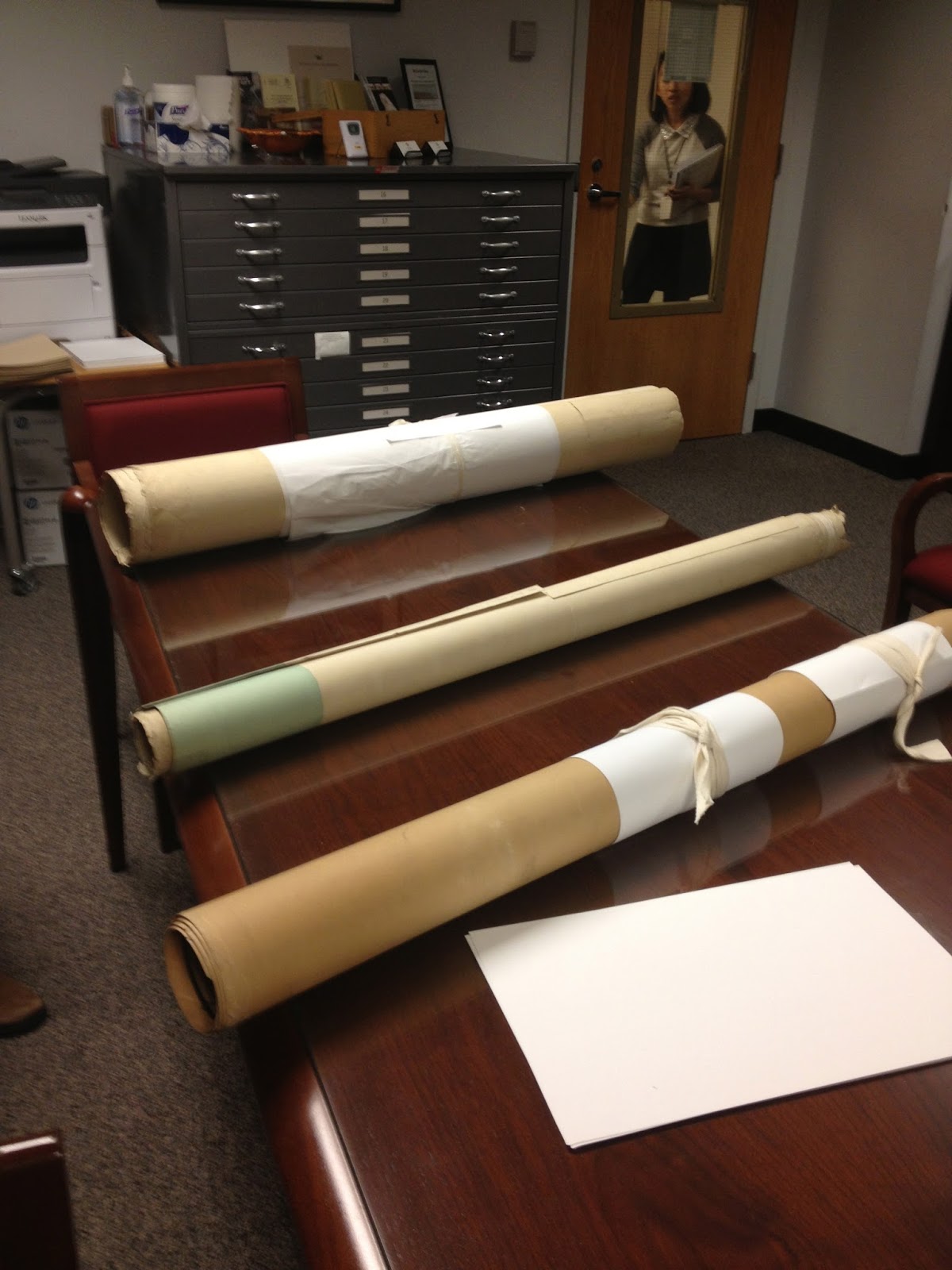
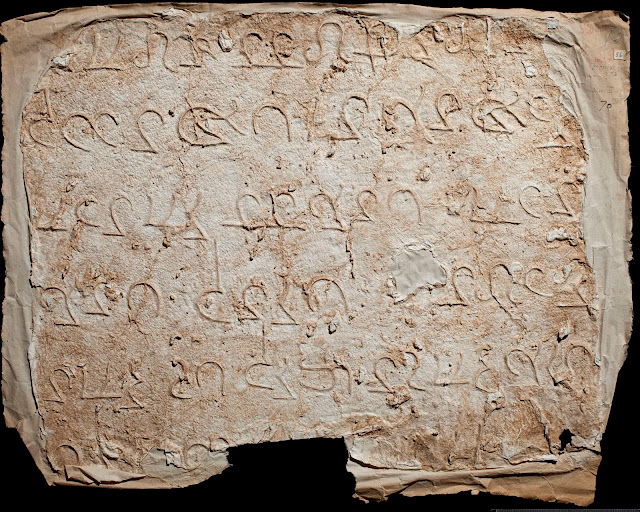
With the abundance of technology that surrounds us every day, it’s easy to forget how we ever got along without it. Never fear, archives are here to help answer this and many more questions! For example, how did archaeologists capture and render a three-dimensional image in the early 20th century? We’re glad you asked. Before the invention of 3-D scanners and printers, there were squeezes.


A squeeze is a series of moldable paper, pulp, latex, or plaster that are layered on top of each other and moistened to create a wet pulp. The substance is then pressed, into a low relief inscription. When the material is dry and removed, it becomes a multidimensional mirror-image representation of the original inscription.

The images shown here are from the Ernst Herzfeld Papers housed in the Freer Gallery of Art and Arthur M. Sackler Gallery Archives. The Archives holds 393 squeezes from the ancient Near East, the largest collection outside of Iran and Iraq. To learn more, visit the Squeeze Imaging Project.

Chelsea Fairley
Freer|Sackler Archives

Tuesday, February 3, 2015

Out of Egypt: a Napoleonic Study of the Ibis

Histoire Naturelle et Mythologique de l’Ibis, plate no. 1
Thanks to the keen eye of Dr. Storrs Olson, a rare book was spotted in a reprint file in the Division of Birds in the Museum of Natural History and transferred to a more suitable habitat, the Cullman Library for cataloging and preservation. It is Histoire Naturelle et Mythologique de l’Ibis, by Jules-César Savigny (1771-1851). Published in Paris in 1805, the work explores both the zoology and the mythology of the Sacred Ibis and the Glossy Ibis in Egypt (QL696.C585 S38 1805). This copy once belonged to Alexander Wetmore (1886-1978), the Sixth Secretary of the Smithsonian who was a distinguished ornithologist; his signature is on the front paper cover.

Hand-colored plate from Description de l’Égypte (Typ 815.09.3210, Houghton Library, Harvard University)
The author, Savigny, had been one of the 151 members of the Institut d’Égypte, a scientific organization created by Napoleon to accompany his disastrous campaign with 55,000 troops in Egypt from 1798-1801. The ambitious goal set for the Institut was an encyclopedic survey of the ancient and modern country of Egypt. The “Savants”—the carefully assembled naturalists, geologists, mineralogists, mathematicians, architects, engineers, cartographers, artists, one musicologist—were left in Cairo after the British Navy under the command of Lord Nelson sunk the French fleet. When the formal surrender was made in September 1801, the British military demanded as spoils of war the Savants’ notes, drawings, plans, artifacts, and specimens, all collected under trying circumstances (to say the least), and the French, wanting to be done with the whole fiasco, agreed. However, zoologist Étienne Geoffroy Saint-Hilaire took an immovable stand, refusing to give up their work and threatening to destroy it all. The British eventually settled for a few trophies, including the Rosetta Stone.  

Plate from Description de l’Égypte (Typ 815.09.3210, Houghton Library, Harvard University)
With the gathered materials finally sent back to Paris, the veteran Savants published Description de l’Égypte from 1809 to 1828—which has now become a headache for librarians and conservators everywhere. It is a major undertaking both to catalog and shelve because the publication, spanning such a long period, is variously bound (up to thirty-five volumes), with four different issues of the first edition, and it is not easy to determine a complete set. It is also a backache. The outsize Carte Topographique measures about three and a half feet and the plates are in several formats, some unfolding over four feet, and quite heavy. Various copies have now been scanned so today it is easy to browse through the images.

Histoire Naturelle et Mythologique de l’Ibis, plate 4
Savigny, despite being a trained botanist, was in charge of the invertebrate and ornithological portion of the Description de l’Égypte. His treatise on the long-legged and curved billed bird, Histoire Naturelle et Mythologique de l’Ibis, was printed before any of the published volumes of the Description de l’Égypte appeared but can be viewed as reflecting the whole of the encyclopedia. It is a detailed examination of both the biology and mythology surrounding the bird in ancient and modern Egypt. Naturalists of the campaign were fascinated that the ibis was not only portrayed so frequently in the tombs, on monuments and in sculpture but also mummified by the thousands. Savigny’s work contains six plates of engravings, some anatomical, others of the hieroglyphics with images of the ibis. The artists of the illustrations were Henri-Joseph Redouté (1766-1852), brother of the better known botanical painter, Pierre-Joseph, and Jacques Barraband (1767-1809); the engraver, Louis Bouquet.

It is an uncommon book. Sadly, the Sacred Ibis is extinct in modern Egypt.  

Histoire Naturelle et Mythologique de l’Ibis
The African Sacred Ibis in Pilanesberg Game Reserve, South Africa (photo by Hein Waschefort, June 2010, Wikimedia Commons)
Ibis Statuette, from Tuna El-Gebel (Hermapolis Magna (no. 209497, donated by President Eisenhower; National Museum of Natural History)
Histoire Naturelle et Mythologique de l’Ibis, plate no. 3
A copy of Histoire Naturelle et Mythologique de l’Ibis in Oxford University has been digitized by the Internet Archive (the Cullman Library copy lacks the half title)

Burleigh, Nina. Mirage: Napoleon’s Scientists and the Unveiling of Egypt (New York, 2007). 


Funerary Urn of Earthenware containing Ibis Mummy, 332-30 B.C.E. (Abydos, Upper Egypt, National Museum of Natural History; no. 055827)
African Sacred Ibis flying at Durban Botanic Gardens, South Africa (photo by Johan Wessels, September 2009, Wikimedia Commons)
Julia Blakely
Special Collections Cataloger
Smithsonian Libraries

Mosaic Plaque depicting an Ibis, 305-30 B.C.E. (Egypt; Freer Gallery of Art, F1908.66)